
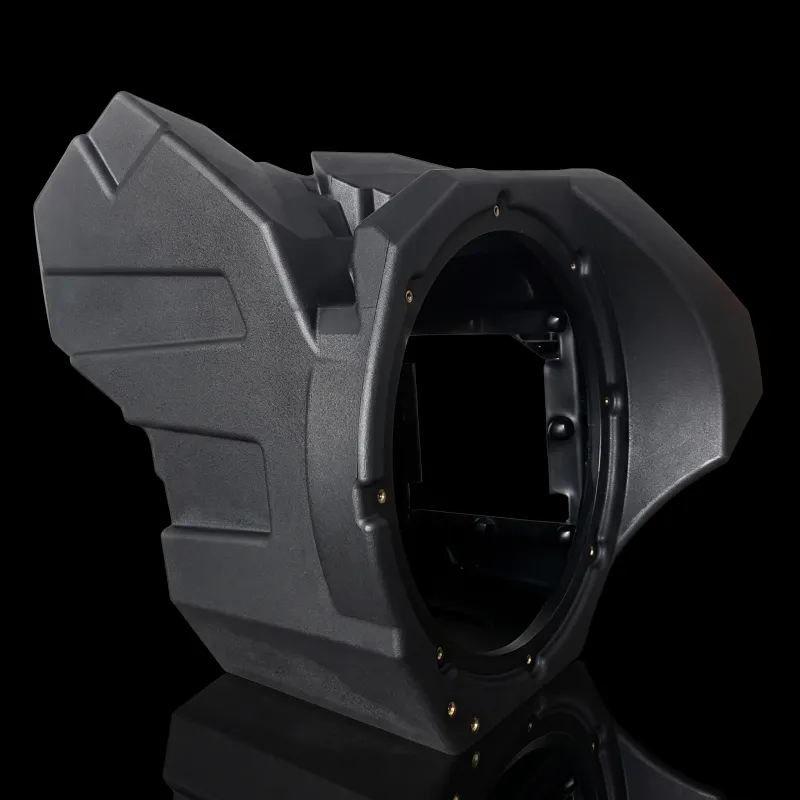
Custom Rotational Molding
Roto molding speaker enclosure
With custom rotomolding, you can manufacture parts that are large, hollow, and geometrically intricate—making it a highly adaptable production method.
Specifications
- Brand
- Superpower
- Material
- Aluminum
Custom Rotomolding: The Versatile Manufacturing Process for Large, Hollow, and Complex Parts
When it comes to manufacturing large, hollow, and intricately shaped plastic components, few processes offer the versatility and cost-effectiveness of custom rotomolding. Also known as rotational molding, this unique manufacturing technique has become the go-to solution for industries ranging from agriculture and construction to renewable energy and consumer goods.
But what exactly makes custom rotomolding so special? And why should you consider it for your next project? Let's dive deep into this fascinating process, its benefits, and how it can bring your most ambitious product designs to life.
What Is Custom Rotomolding?
Custom rotomolding is a manufacturing process that produces large, hollow, and complex-shaped plastic parts. The process starts with loading a plastic resin—typically in powder form—into a hollow mold. This mold is then heated in an oven while rotating simultaneously on two perpendicular axes.
As the mold rotates, the plastic powder melts and evenly coats the inner walls of the mold cavity. The result is a seamless, one-piece part with uniform wall thickness, even in complex geometries. Once the plastic has fully melted and coated the mold, the assembly is cooled while still rotating, allowing the material to solidify. Finally, the finished part is removed from the mold.
The Four-Step Process
The rotational molding process can be broken down into four main stages:
- Loading: The plastic powder or resin is loaded into the mold.
- Heating and Rotating: The mold is placed in an oven and rotated on two axes. The powder melts and adheres evenly to the mold walls.
- Cooling: The rotating mold is cooled, allowing the plastic to solidify.
- Demolding: The finished part is removed from the mold and, if necessary, undergoes secondary operations like trimming or assembly.
This pressureless process is what sets rotomolding apart from other manufacturing methods like injection molding or blow molding. Since there's no high pressure involved, tooling costs are relatively moderate, making rotomolding an economically viable option for both small and large production runs.
Why Choose Custom Rotomolding?
Custom rotomolding offers a unique set of advantages that make it the preferred choice for certain applications. Here's why manufacturers and product designers keep coming back to this process:
1. Design Freedom for Complex Shapes
One of the biggest selling points of custom rotomolding is its ability to produce parts with complex geometries. Unlike injection molding, which requires parts to be designed around the constraints of high-pressure injection, rotomolding can accommodate intricate designs with integrated features such as handles, ribs, and mounting points—all in a single, seamless component.
This design freedom means you can create parts that are not only functional but also highly durable. Integrated features are molded as part of the product rather than added later, which eliminates weak points and reduces the need for secondary assembly operations.
2. Uniform Wall Thickness
Rotomolding excels at producing parts with consistent wall thickness, even in complex shapes. This uniformity enhances structural integrity and ensures that the final product performs reliably under stress. It's particularly important for applications like water tanks, chemical storage containers, and industrial components that must withstand internal pressure or external loads.
3. Cost-Effective for Low to Medium Volumes
Compared to injection molding, which requires expensive steel molds, rotomolding tooling is relatively affordable. Aluminum molds used in rotational molding cost significantly less, making the process ideal for low-to-medium production runs. Whether you need a few hundred parts or several thousand, rotomolding offers a cost-effective path to market without sacrificing quality.
4. Durability and Material Performance
Rotomolded parts are known for their exceptional durability. Polyethylene, the most commonly used material in rotomolding, offers outstanding toughness, impact resistance, and weatherability. Advanced resins can even reduce material weight without compromising strength—some allow parts to be lightweighted by up to 20% while maintaining structural performance.
5. Sustainable Manufacturing
Sustainability is a growing concern in manufacturing, and rotomolding answers the call. The process generates minimal material waste—any excess powder can be reused—and the finished products are fully recyclable. Additionally, the lightweight nature of rotomolded components reduces transportation costs and carbon emissions over the product's lifecycle.
Applications of Custom Rotomolding
Custom rotomolding is used across a wide range of industries, thanks to its versatility and ability to produce durable, large-scale parts. Some common applications include:
- Water Tanks and Storage Containers: Polyethylene tanks for agricultural, industrial, and residential use are among the most common rotomolded products.
- Industrial and Commercial Equipment: Chemical storage tanks, dumpsters, and pallets benefit from the durability and corrosion resistance of rotomolded parts.
- Recreation and Toys: From kayaks to playground equipment, rotomolding brings lightweight and impact-resistant designs to life.
- Renewable Energy: Rotomolded components are used in wind turbines for cooling systems and nacelle housings, offering lightweight and durable solutions that reduce manufacturing costs.
- Custom Parts: Virtually any industry can benefit from custom rotomolding, whether it's automotive components, defense equipment, or agricultural machinery.
Design Considerations for Custom Rotomolding
To get the most out of custom rotomolding, it's essential to follow proven design guidelines. Here are a few key considerations:
Draft Angles and Wall Transitions
Draft angles—slight tapers in the mold design—help ensure that parts can be easily removed from the mold without damage. Smooth transitions between wall sections and rounded radii prevent weak spots and material thinning.
Surface Finish and Texture
Rotomolding allows for a wide range of surface finishes, from smooth to textured, directly in the mold. This eliminates the need for secondary finishing operations and can improve the aesthetic and functional appeal of the final product.
Inserts and Integrated Features
Metal inserts, such as threaded bushings or mounting plates, can be placed in the mold before heating. During the process, the molten plastic bonds securely around the insert, creating a strong and permanent connection.
The Future of Custom Rotomolding
The rotational molding industry is continuously evolving. Innovations in materials, such as advanced polyethylene resins and multi-layer molding techniques, are expanding the possibilities for rotomolded parts. Additionally, efforts to shorten cycle times and broaden the range of processable materials are making rotomolding an even more attractive option for manufacturers.
For businesses looking to bring large, hollow, or complex plastic parts to market, custom rotomolding offers a compelling combination of flexibility, cost-effectiveness, and durability. By partnering with an experienced rotational molding company, you can turn your design vision into a reality—efficiently and at scale.
Conclusion
Custom rotomolding is more than just a manufacturing process—it's a gateway to innovation. Whether you're designing water tanks for agricultural use, components for wind turbines, or durable recreational products, rotomolding delivers high-quality, cost-effective solutions that meet the demands of modern industry.
With its design freedom, uniform wall thickness, and ability to produce large, hollow parts with integrated features, custom rotomolding remains a top choice for manufacturers around the world. If you're considering rotomolding for your next project, now is the time to explore its potential. Reach out to a trusted rotomolding partner and discover how this versatile process can bring your ideas to life.