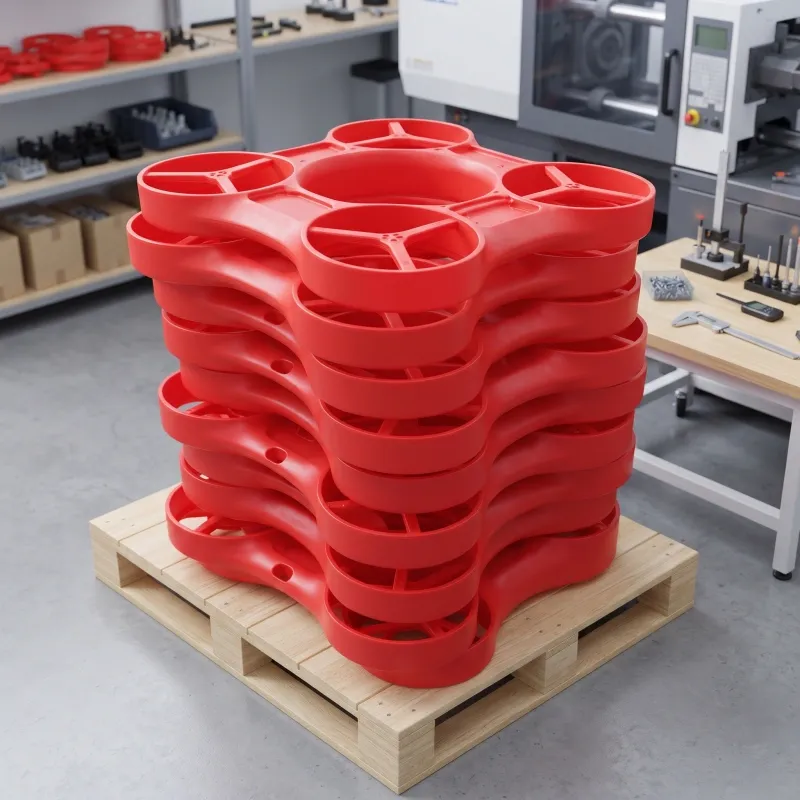
Rotomoulded Plastic Drone Body
Rotational Molding in Drones: Why Seamless Plastic Parts Are Gaining Ground
Key Takeaways
- Rotational molding produces seamless, stress-free drone components without welded joints or assembly fasteners.
- The process is cost-effective at low-to-mid volumes, with tooling far cheaper than injection molding.
- Practical applications today include fuel tanks, water tanks for agricultural drones, and rugged protective cases.
- Design limitations exist: rotomolding suits hollow, simple geometries better than high-tolerance precision parts.
When engineers discuss drone manufacturing, injection molding and carbon fiber composites usually dominate the conversation. Rotational molding rarely enters the picture. That is beginning to change—not because rotomolding can replace precision injection molding, but because a specific class of drone components benefits from what rotomolding does uniquely well: producing hollow, seamless, impact-resistant plastic parts without expensive tooling.
What Rotational Molding Actually Does
Rotational molding uses a closed mold filled with polymer powder, heated while rotating on two axes. The powder melts and coats the mold interior evenly, forming a hollow part with uniform wall thickness. Once cooled, the part is removed as a single, seamless piece .
For drone applications, three characteristics matter most. First, the process creates no weld lines or joints, which eliminates common failure points in fuel and water tanks. Second, tooling costs are significantly lower than injection molding at mid-volume production, making it viable for specialized or low-volume drone platforms. Third, the lack of internal forming pressure means parts carry no pressure-induced residual stresses, improving durability under vibration and impact .
Where Rotomolding Fits in Drone Design
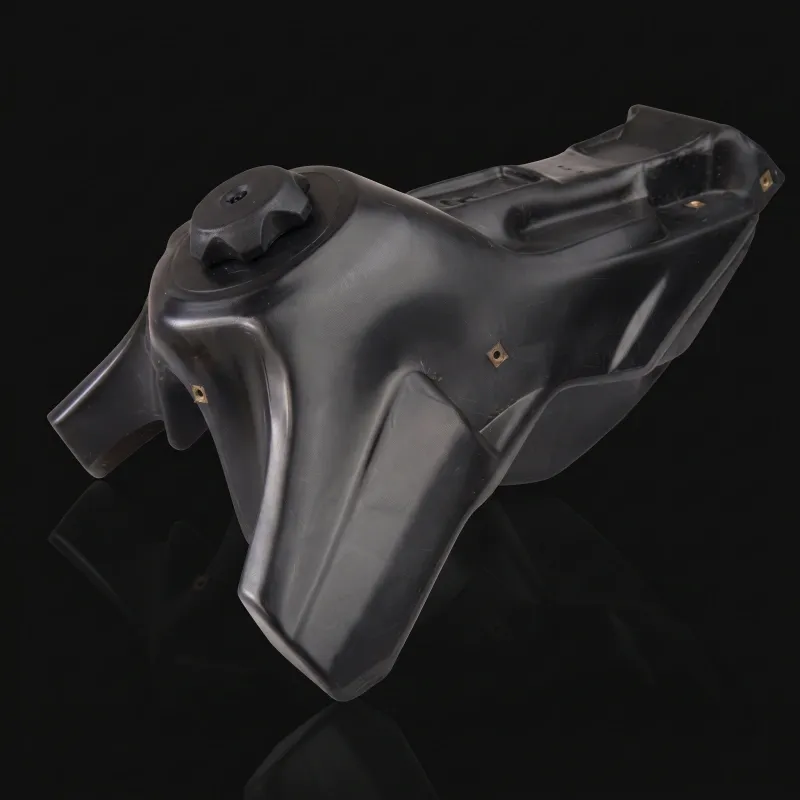
The most established application is liquid containment. Agricultural drones require water tanks that are lightweight, airtight, and resistant to impact during field operations. Rotomolded tanks meet these requirements without the seams that could leak under repeated vibration . Similarly, custom fuel tanks for larger unmanned platforms benefit from the seamless construction, particularly when the tank geometry must conform to irregular internal spaces .
Beyond tanks, rotomolding serves the support ecosystem around drones. Military and defense operators use rotomolded drone cases that protect airframes and electronics from impact, weather, and chemical exposure. These cases integrate handles, mounting points, and seals directly into the molding process, reducing post-production assembly .
The Honest Limitations
Rotomolding is not a universal solution. The process cannot match injection molding’s tolerance precision or cycle speed for high-volume production. Thin walls and complex internal rib structures—common in drone chassis design—are difficult or impractical to mold rotationally. Surface finishes are functional rather than cosmetic. And the process is slower per part than injection molding once volumes justify steel tooling.
For drone airframes and structural components, injection molding of glass-filled nylon or advanced 3D printing remain the dominant choices for good reason: they offer the precision, weight optimization, and production speed that high-volume drone manufacturing demands .
The Practical Takeaway
Rotational molding occupies a specific niche in unmanned systems: hollow, seamless, durable plastic parts produced at volumes too low for injection molding but too demanding for fabrication or 3D printing. Fuel tanks, agricultural water tanks, and rugged transport cases represent the strongest current use cases. Engineers designing drone platforms with liquid containment or protective enclosure requirements should evaluate rotomolding early in the design cycle—the tooling savings and seamless construction may justify designing around its geometric constraints.
FAQ
Can rotational molding make drone frames?
Generally no. Drone frames require thin walls, tight tolerances, and complex internal features that rotomolding cannot produce economically or precisely. Injection molding and composite layup remain standard.
What is the main advantage of rotomolding for drone tanks?
Seamless construction. No welded joints means no leak paths under vibration, and the one-piece hollow form suits liquid containment naturally.
Is rotomolding cheaper than injection molding for drones?
Tooling is cheaper, but per-part cost depends on volume. For fewer than several thousand units, rotomolding often wins on total cost. Above that, injection molding’s speed and precision usually justify the higher tooling investment.