Buying Guides
Solar LED Ball Lights: How Hotels and Event Planners Choose Garden Balls That Last Outdoors
Solar LED ball lights that survive weather: PE shell, IPX5 or IPX7, 8–10 hours on one charge. How hotels and planners choose garden balls, and what to ask a China supplier before ordering. MOQ 50 pcs.
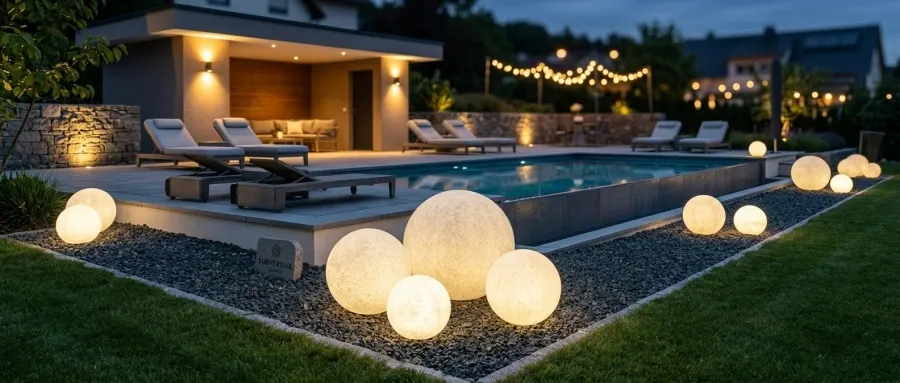
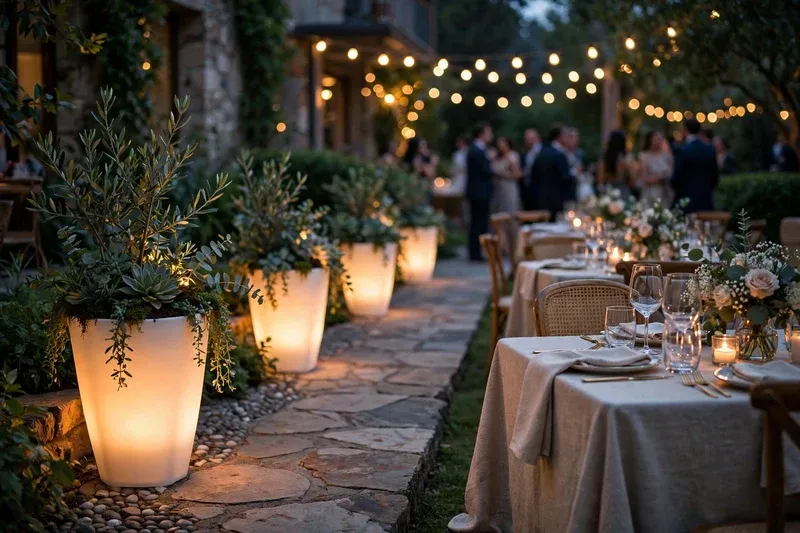
Picture the evening. A hotel garden at dusk, the wedding reception just starting, and the glowing balls along the lawn and around the pool are lit — soft color, warm light, the whole place suddenly looks like somewhere people want to stay.
Now picture the same garden three months later. Half the balls are dark. One has cracked in the sun. Another took in water in the first real rain and never lit up again. The batteries die halfway through the evening, right when the party is getting going.
We have seen this happen many times, because the buyer chose by the photo. A photo cannot tell you the four things that decide whether a solar LED ball survives outdoors: the shell, the waterproof rating, the power, and the testing behind it.
The light is the easy part. The shell is the product.
Every LED garden ball looks the same in a catalogue photo: a white sphere, glowing. What is different is what it is made of, and that decides whether it lasts one season or five.
Our garden balls are made of polyethylene, PE for short — a plastic built for outdoor life. A ball sits outside all day, every day, in sun, rain, and frost, and the shell is what takes all of it. Ask any supplier what the shell is made of, and what happens to it after a summer in the sun. If the answer is just “plastic”, walk away.
The shape matters too, because a ball is not one shape. A round ball rolls. A flat ball sits still. A ball with a ground spike stays where you put it in the soil. A ball that floats has to be watertight in a way a garden ball never has to be. So the first question is not “which ball?” — it is “where will it live, and what will it have to survive there?”
IPX5 or IPX7: the number that decides whether your ball survives
The second question is the waterproof rating, and here you want a number, not a promise. “Waterproof” on its own means nothing. Everyone writes it.
Most of our garden balls are rated IPX5 for outdoor and indoor use. In plain language, they stand up to rain, splashes, and being hosed down. It does not mean you can sink one in the swimming pool — no garden ball in this class is made for that. But for a lawn, a garden bed, a patio, or a terrace in a storm, IPX5 is the right rating, and it is the rating you should ask for in writing before you pay.
One of our balls is different: the LED Floating Pool Ball Lights are rated IPX7, because they float in the water. That is the ball for a swimming pool or a garden pond. The small flat Solar Floating Pool Lights float too, but they are IPX5 — they sit on the surface, and they are not made to go under it. The difference between IPX5 and IPX7 is the difference between a ball that survives the rain and a ball that lives in the pool, so check the rating against the place, not against the photo.
The rating is only as good as the testing behind it. Every one of our garden balls is 100% tested before shipping — a burn-in test, a waterproof test, and a function test, on every single unit, not on a sample. That is the part of the work nobody photographs, and it is the part that keeps your balls lit on the night that matters.
Solar, battery, or plug: match the power to the night
The third decision is power, and it is really a question about how the ball will be used.
A solar ball is the garden's friend. Our Outdoor Solar Garden Ball charges its battery from the sun during the day and glows after dark on its own — no cable to run, nothing to plug in, nothing to remember. For lawns, garden beds, and paths, that is the right answer, as long as the spot gets real sun. A shaded courtyard in winter will not charge it, so ask where the ball will actually live before you choose solar.
A rechargeable battery ball is the event planner's friend. Ours charge in about six hours and run for about eight to ten hours on one charge — a full evening, from the first guest to the last taxi, with no cable across a lawn for anyone to trip over. For weddings, parties, and one-night events, that is the right answer. The pool balls charge the same way, and the IPX7 floating ball also charges on an inductive base — set it on the base, no plug to push into a wet ball.
A plug-in ball is the right answer when the ball is not going anywhere. If you are lighting a hotel entrance or a restaurant terrace that stays put all season, an AC plug-in (110–220V) means the light never runs out.
Six balls, six jobs
Size is where most orders go wrong in the other direction: everything ordered in one size, and then half of it looks lost in the space. A ball that is perfect on a table disappears at a hotel entrance, and a ball made for an entrance overwhelms a table. Here are six of ours, and the job each one is made for:
Ball | Size | Power | Waterproof | Best for |
D25–60 cm (6 sizes) | Solar panel + rechargeable battery | IPX5 | Lawns, garden beds, paths — the standard solar ball | |
D20–80 cm (8 sizes) | Solar panel + rechargeable battery | IPX7 | Swimming pools, hotel pools, garden ponds — the only one that goes in the water | |
D12–300 cm (14 sizes) | Rechargeable battery or AC 110–220V plug-in | IPX5 | Tables to entrances — the widest range, up to a 3-metre statement piece | |
D25–60 cm (6 sizes) | Solar panel + rechargeable battery or 110–240V plug-in | IPX5 | Garden beds, rockeries, lawn edges — stone-effect look with a ground spike | |
D25 × H6 / D32 × H7 cm | Rechargeable battery | IPX5 | Pools and ponds — the smallest, flattest floating ball | |
D28 × H17 / D35 × H20 / D35 × H27 cm | Rechargeable battery or AC 110–220V plug-in | IPX5 | Tables, terraces, poolside — flat, so it stays where you put it |
All six use RGB LED light with a remote control — warm white for dinner, color for the party — and all six come with the same shell, the same testing, and the same terms. The difference is only size, shape, and rating: choose by the place it will stand, and the water it will meet.
Two of them deserve a second look, because they look alike on paper and are not alike at all. The Outdoor Solar Garden Ball and the Waterproof Garden Sphere Lights share the same six sizes and almost the same power — but the sphere light has a stone-effect shell that blends into a garden bed, and a ground spike that fixes it into the soil so it does not roll. One is the ball you notice. The other is the ball you do not notice until it lights up.
Before you order: the eight checks
If you take one thing from this article, take this table. Run through it with any supplier — including us — before you place an order. A good supplier answers all eight without hesitating. A bad one goes quiet on two or three of them.
# | What to check | What good looks like |
1 | Shell material | Polyethylene (PE) shell, made for outdoors, UV-resistant |
2 | Waterproof rating | A real rating in writing — IPX5 for rain and splashes, IPX7 for a ball that floats in the pool |
3 | Power and run time | About 6 hours to charge, about 8–10 hours of light; solar for sunny spots, plug-in for fixed spots |
4 | Working temperature | From −20°C to +50°C, so frost and summer heat do not kill it |
5 | Testing | 100% tested before shipping: burn-in test, waterproof test, function test |
6 | Color and control | RGB LED with remote control, so one ball can do dinner and dancing |
7 | Customization | OEM/ODM, custom logo, custom colors — your brand, not someone else's |
8 | Terms in writing | MOQ, sample time, bulk time, warranty — see the table below |
How an order actually works
Here is what happens when you order from us, with the numbers as they are — no surprises later.
Item | Our terms |
MOQ | 50 pcs |
Sample lead time | 7 days |
Bulk lead time | 30–45 days |
Warranty | 12 months |
We always suggest starting with a sample. Seven days, and you hold the real ball in your hands: the weight of it, the light, the remote, the way it feels. Put it outside. Leave it in the rain. Float it in the pool if that is where it will live. Charge it and see how long it runs. A sample is the cheapest insurance in this business. Then the bulk order follows in 30 to 45 days, made to your colors and your logo if you want them.
We are a manufacturer, not a trading desk: since 2013, four factories in China, over 20,000 square meters, 350 people, making outdoor LED lighting and furniture. When you ask us a question about a garden ball, the answer comes from the factory floor.
The ball that is still glowing next year
So here is the short version. Do not buy the prettiest photo. Buy the shell, the rating, the battery, and the testing — from a supplier who will put all four in writing.
If you are planning a garden, a pool, or an event space, look at our LED garden balls — six balls, from a small flat floater to a three-metre sphere — and see the full outdoor range on our Outdoor LED Lighting page. Then request a quote and tell us what you are lighting: the space, the number of pieces, and when you need them. We will answer within 24 hours.
The evening you are planning deserves balls that are still glowing when it ends — and still glowing next year.
Quick answers
Which LED garden ball should I choose for a swimming pool?
The IPX7 LED Floating Pool Ball Lights — it floats in the water and charges on an inductive base. The IPX5 floating balls sit on the surface and must not go under.
How long does a solar LED ball glow on one charge?
About 8 to 10 hours. A full charge takes about 6 hours, by sun during the day or on a charger. Put a solar ball where the sun reaches, or it will not charge well.
What is the difference between the solar garden ball and the stone-effect sphere light?
Same six sizes and almost the same power. The stone-effect Waterproof Garden Sphere Lights blend into a garden bed and come with a ground spike that fixes them into the soil; the standard solar garden ball sits loose on the ground.