Oct 13, 2026
Rotomolding Industry Summit Hosted at Our Facility
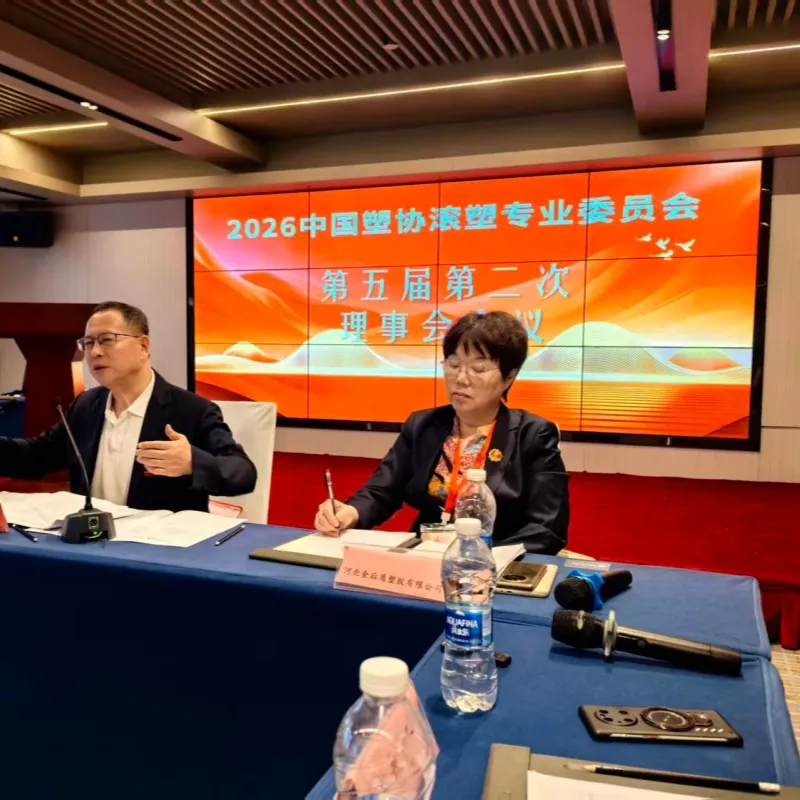
Rotomolding Industry Summit Hosted at Our Facility: A Deep Dive into Technical Breakthroughs and Market Direction
This May, the Association of Rotational Molders brought its annual industry exchange to our factory floor. Leaders from across the rotational molding supply chain—processors, resin suppliers, mold makers, and industry analysts—gathered for two days of candid discussion on the technical bottlenecks, market shifts, and sustainability pressures shaping our industry. As the host facility, we were honored to bring these conversations under our own roof, and we came away with firsthand insight into where rotomolding is headed.
The global rotational molding market is on a steady growth trajectory. Industry research puts the 2025 global rotomolding market at roughly $5.45 billion, with projections reaching $7.4 billion by 2031—a compound annual growth rate above 5%. Polyethylene still dominates, accounting for approximately 72% of rotomolded products. But a recurring theme among attendees was that this single-material dependence represents a structural risk the industry can no longer afford to ignore.
One of the central topics was the push of rotomolding into high-performance applications. Traditionally, rotational molding has been viewed as the economical solution for large, hollow parts—water tanks, kayaks, playground equipment, traffic safety products. Over the past two years, however, demand from automotive, hydrogen storage, and chemical processing has begun forcing the industry to raise its technical game. Several resin suppliers presented progress on engineering-grade materials: modified polyamide 6 (PA6) is now entering the rotomolding conversation, targeting Type IV pressure vessel liners and chemical-resistant piping—applications previously dominated by blow molding and injection molding. This means the competitive boundary of rotomolding is expanding outward, but it also places far greater demands on wall thickness uniformity, powder flow characteristics, and thermal stability.
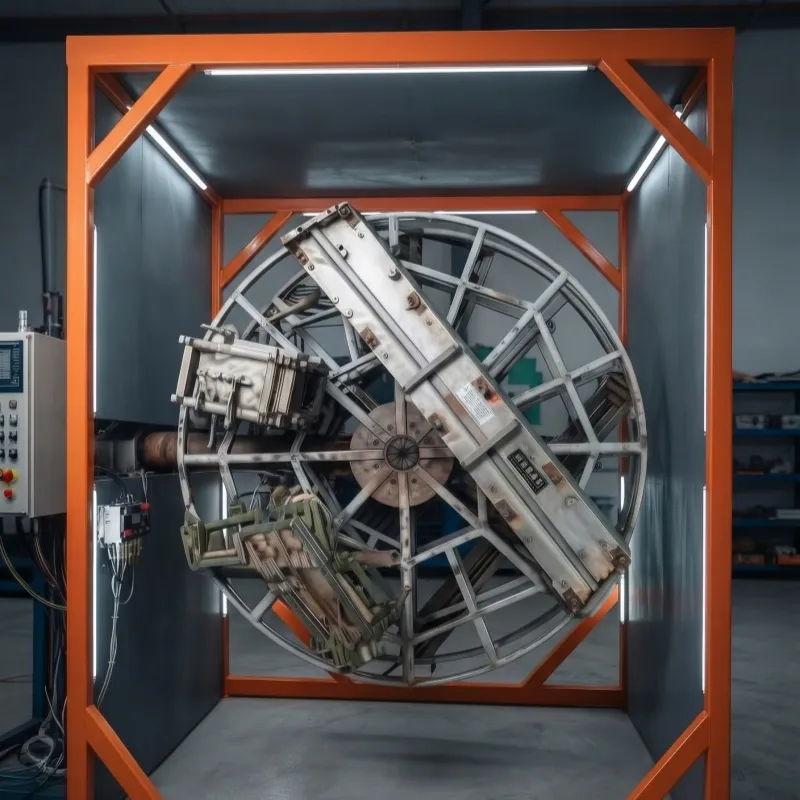
Automation and process control was another thread running through the entire event. Attendees toured our shuttle-type rotomolding lines and engaged in on-the-floor discussions about intelligent temperature control systems, burner cycle optimization, and post-processing automation. Interest in real-time mold monitoring and simulation software was noticeably high—not as a replacement for process experience, but as a way to turn repeatability into a measurable metric. Several peers from North America and Europe acknowledged that the quality consistency gap between rotomolding and injection molding is not fundamentally a question of principles, but of data accumulation and closed-loop control.
Circular economy and material compliance also generated intense discussion. Sustainability regulations in European markets are placing real pressure on rotomolding companies, particularly in compliance-sensitive segments like food contact, potable water storage, and chemical containers. The supply capacity and performance consistency of recycled polyethylene (rPE) emerged as a key point of connection between upstream and downstream players. One resin producer noted that chemical recycling projects are boosting output of circular polyethylene, but the powder form and particle size distribution required for rotomolding still demand dedicated adaptation processes. For export-oriented factories, EU compliance certification is shifting from a bonus to a baseline requirement.
From a market structure perspective, North America and Asia-Pacific offered an interesting contrast. The North American rotomolding industry has undergone significant consolidation in recent years, with top players expanding share through acquisitions—yet custom and low-to-mid volume orders continue to leave room for specialized shops. Asia-Pacific, meanwhile, is the fastest-growing region, holding roughly 40% of global market share, driven primarily by infrastructure construction and agricultural water storage demand. International attendees acknowledged the production scale of Chinese factories while also noting our ongoing investment in standardized processes and quality management systems.
For us as hosts, the most immediate takeaway came from supply chain collaboration. Throughout the event, mold suppliers, resin producers, and rotomolding processors held multiple rounds of one-on-one matchmaking sessions. A clear consensus emerged: when moving new materials from lab data to production reality, what's often missing is not performance specifications but powder formulation optimization and molding parameter packages tailored to the rotomolding process window. The efficiency of this "last mile" collaboration directly determines whether a rotomolding factory can gain first-mover advantage in high-end applications.
As the event wrapped up, several delegates observed that the next phase of competition in rotomolding will no longer be about who has the bigger oven, but about who has the more precise system, the more reliable material solution, and the stronger compliance capability. We couldn't agree more. Hosting this exchange turned our factory floor into a live venue for industry dialogue, and it gave us a clearer view of where we need to keep investing—particularly in process control and material adaptation.
What makes rotational molding compelling is its simplicity and flexibility. The future of our industry depends on whether we can preserve that simplicity while pushing precision, repeatability, and sustainability to a new standard. We look forward to continuing the work with partners up and down the supply chain as we take a solid step toward the next inflection point in rotomolding technology.