Oct 6, 2026
How Does the Rotational Molding Machine Operate?
How Does the Rotational Molding Machine Operate? A No-Nonsense Guide to Rotomolding
So you wanna know how a rotational molding machine actually works. Not the textbook version—the real deal. Fair enough. I'm gonna walk you through it like we're standing on the shop floor, coffee in hand, watching one of these bad boys do its thing.
Here's the bottom line up front: a rotational molding machine takes plastic powder, throws it inside a hollow mold, spins that mold around in an oven until the powder melts and coats every inch of the inside, then cools it down and pops out a seamless hollow part. That's the whole game.
The Basic Setup: What You're Looking At
Picture a big oven. Industrial size. Now imagine some arms sticking out of it—like a giant rotisserie, but instead of chickens, you've got metal molds bolted to the ends.
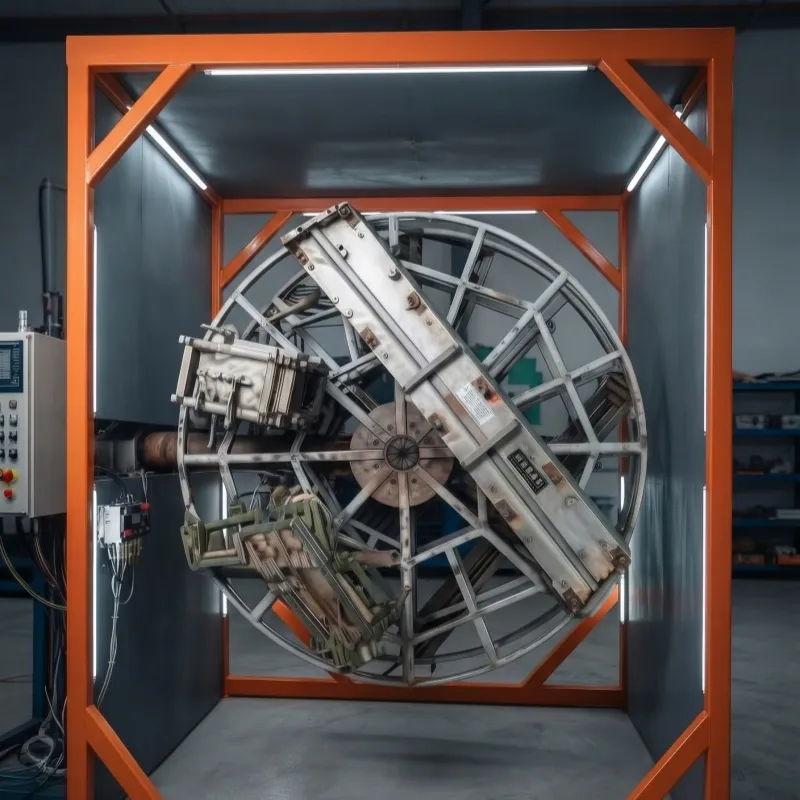
The most common setup is called a carousel machine. It's got three stations arranged in a circle: a loading/unloading spot, a heating oven, and a cooling chamber. The arms rotate between these stations like a merry-go-round that never stops.
Some machines are simpler than that. Batch systems basically roll a mold into an oven, spin it, roll it out, and cool it off somewhere else. Less fancy, more labor, but cheaper to set up.
The Four Steps That Actually Matter
Every rotomolding cycle boils down to four moves: charging, heating, cooling, and ejection. Let's break each one down.
Step 1: Charging the Mold (Dumping in the Powder)
First things first—you gotta get the plastic inside. It's not pellets like injection molding. It's powder. Fine, like flour or powdered sugar.
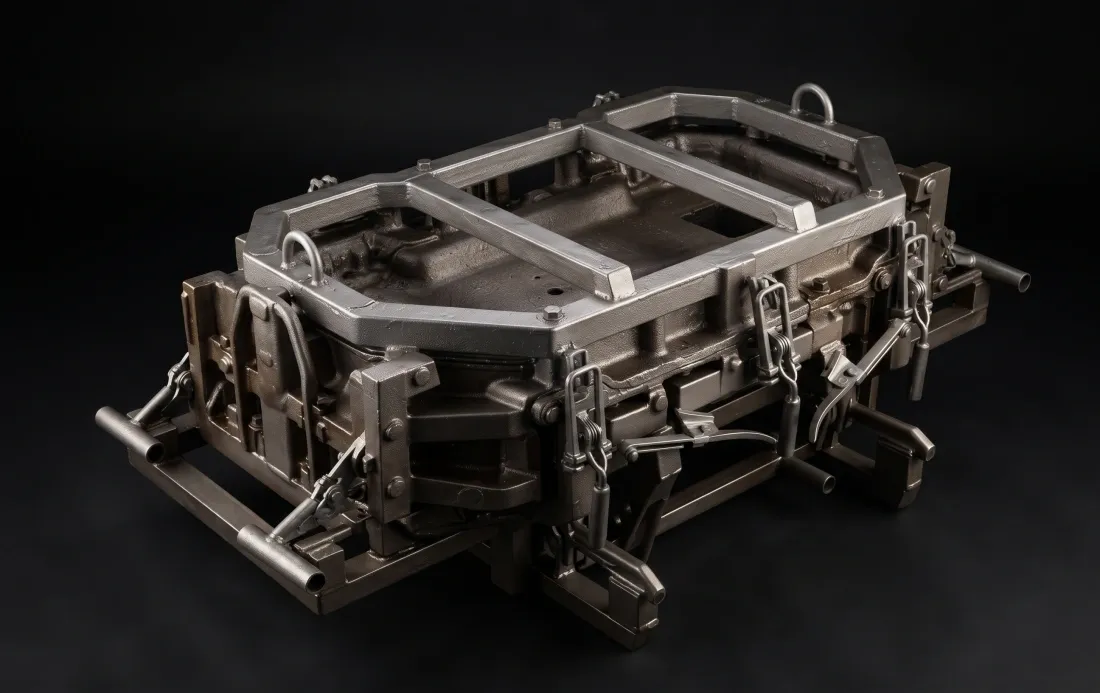
You open up the mold, which is usually made of aluminum or steel, and dump in a precise amount of polymer powder. How much? Depends on how thick you want the final part. The inside of the mold defines the outside of your part, so whatever powder you throw in there, that's the wall thickness you're gonna get.
Here's a cool trick: you can toss in extra stuff at this stage. Glass fibers, pigments, even little metal inserts that become part of the final product. They just get tumbled around with the powder and end up embedded in the plastic.
Once the powder's in, you bolt the mold shut. It's gotta be sealed tight, but with a vent tube somewhere so air can escape as things heat up. Otherwise you're building a bomb.
Step 2: Heating (The Spin Cycle)
Now the fun part. The arm swings the mold into the oven. Temperatures usually run around 500 to 600 degrees Fahrenheit, sometimes higher depending on the material.
And here's where the "rotational" part comes in. The mold starts spinning. But it's not just spinning one way. It's rotating on two axes simultaneously—think of a globe spinning while also tumbling end over end.
Why two axes? Because you need that powder to stick to every single surface inside the mold. If you only spun it one way, gravity would pool the melted plastic at the bottom. Two-axis rotation keeps everything coated evenly.
The speeds are slow, by the way. We're talking single-digit RPMs here, maybe 4 to 12 rotations per minute. This isn't a centrifuge. You're not trying to fling the plastic outward with force. You're just tumbling it around so gravity does the work of spreading it everywhere.
As the mold heats up, the powder starts to melt. It sticks to the hot inner walls, layer by layer, until there's no loose powder left and you've got a uniform coating of molten plastic covering the entire cavity.
Step 3: Cooling (Chill Out)
Once the plastic is fully melted and distributed, the arm pulls the mold out of the oven and moves it to the cooling station. Sometimes it's just ambient air. Sometimes it's fans. Sometimes it's a water mist spray.
The mold keeps rotating during cooling. This is critical. If you stopped spinning while the plastic was still soft, it would sag and pool. You'd end up with a lopsided part and a sad face.
Cooling is also where the plastic shrinks a little. As it solidifies, it pulls away from the mold walls naturally. That's your friend. It makes the part easier to pop out later.
Step 4: Ejection (Pop It Out)
Mold's cool enough to handle. You open it up, and there's your part. A hollow, seamless, one-piece plastic thing—could be a kayak, a fuel tank, a playground slide, a cooler, whatever.
You pull it out. Sometimes while it's still a little warm. Then you close the mold back up and start the whole cycle over again.
Why Does Anybody Do It This Way?
Good question. Rotomolding isn't fast. A single cycle can take 20 minutes to an hour or more. Injection molding spits out parts in seconds.
But here's the thing: rotomolding makes stuff that other processes can't touch. Seamless hollow parts with uniform wall thickness. No weld lines. No stress points. No expensive injection molds that cost six figures.
If you're making 50 kayaks or 500 water tanks, rotomolding makes sense. If you're making 50,000 phone cases, it doesn't. It's a niche, and it owns that niche.
The Stuff Nobody Tells You
A few things I've picked up that the brochures gloss over:
Mold design matters more than you think. Those aluminum molds aren't cheap to make, but they're way cheaper than injection tooling. You can get away with simpler molds, and you can run multiple parts in one mold if you design it right.
Venting is not optional. That little tube I mentioned? If it's clogged or undersized, your part is gonna have bubbles, weak spots, or worse. Air has to escape as the powder heats up and expands.
Cooling controls quality. Cool too fast and you get warping. Cool too slow and you're wasting time. The sweet spot depends on the material and the part geometry. This is where experience really pays off.
You can add reinforcements. Glass fibers mixed into the powder give you a stronger part. Some of those fibers poke through the inner wall surface, which actually helps if you're gonna foam-fill the part later. The fibers act like little anchors.
The Takeaway
Rotational molding is one of those processes that looks simple—spin a mold, melt some plastic, done—but has a lot of nuance under the hood. The machine itself is basically an oven with rotating arms. The magic is in the timing, the rotation speeds, the cooling rates, and the powder itself.
If you ever get the chance to watch one of these machines run, take it. It's weirdly hypnotic. The mold goes in, the arm spins around, and twenty minutes later somebody pulls out a giant plastic canoe. That never gets old.