Rotomolded Flower Pot and Cloud Seat
Custom rotomolded flower pots and cloud seats made in one seamless piece in China — UV-resistant, no joints to split, made to your sample or 3D file. MOQ 50 pcs, quote in 24 hours.
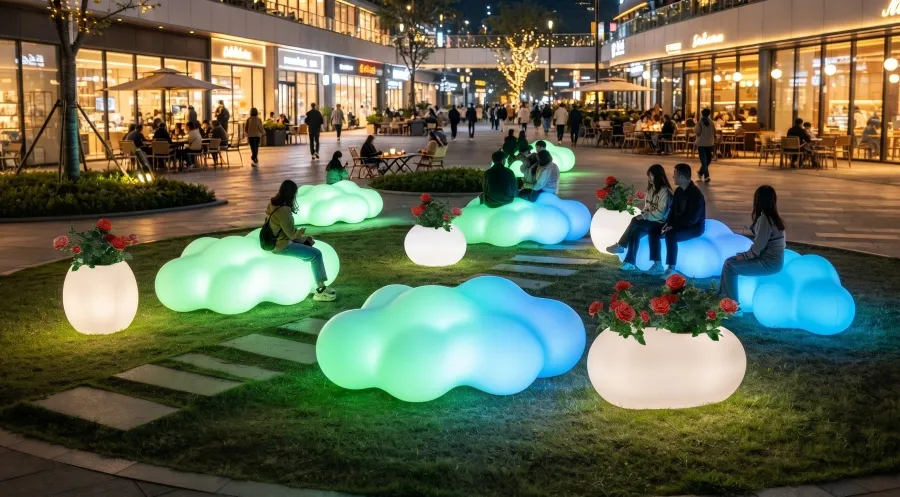
A flower pot and a cloud seat look like two different products. One holds soil and a plant. The other holds a person who wants to sit somewhere soft, and glows after dark. But ask the buyer who orders them and you hear the same story twice: a big hollow shape that has to live outside, get knocked around, sit in the sun and the rain, and still look like it did on the day it arrived. That is the job rotational molding was made for, and it is why we make both of these in the same factory, on the same machines, from the same family of materials.
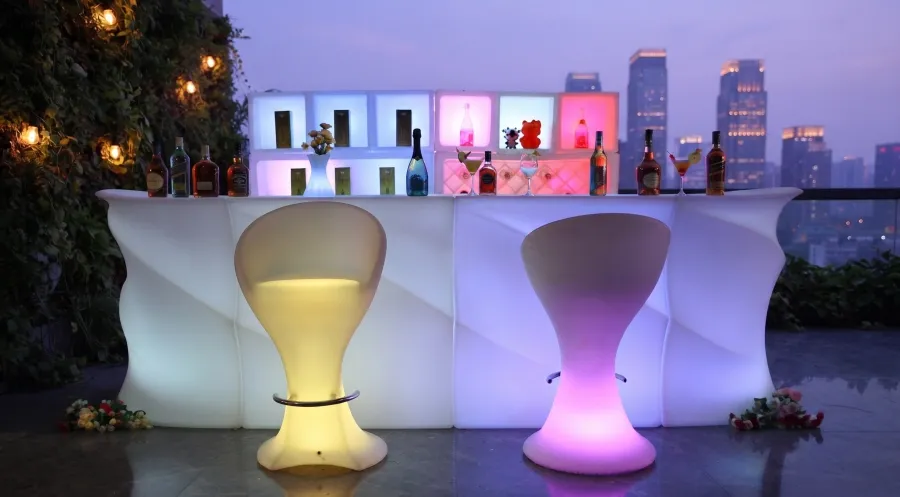
We make them in our 4 factories in China — 20,000+ m2 in total, 350 employees, 25 rotomolding machines, able to make parts up to 4 m — and we make them to order, from your sample or your 3D design file. The Rechargeable LED Planters and the Glowing LED Cloud seat in this article are examples of what we have made before: the point is not to sell you this exact pot or this exact seat, it is to show what the process can do when your shape is the starting point.
A planter fails in ways that have nothing to do with how it looks in a catalogue photo. Soil is heavy, and it gets heavier when it rains. A pot that is thin in the base bows out, and once it bows it never comes back. A pot with a joint where the base meets the wall is a pot with a place for water to sit and work its way in. And a pot that lives outside all year has to take the sun without fading to a chalky white and the cold without turning brittle. So the questions to ask a supplier are not about the colour on the screen. Ask how the wall is made, whether the colour runs through the whole wall or only sits on the surface, and whether the base is made in the same piece as the wall. Rotational molding makes the whole pot in one piece — powder in a hollow mold, turning slowly on two axes in an oven, coating the inside evenly, cooling while it keeps turning so nothing slumps. No seam for water to find. No joint for a crack to start from.
Drainage is the detail buyers forget until the first plant drowns. If your planter needs drainage holes, tell us before the mold is planned, not after it is made. Holes, inserts and fixing points cost little to plan for and a lot to retrofit. The same goes for anything the pot has to sit on or be fixed to — a hotel entrance, a restaurant terrace, a park path. Send us the sample or the drawing and tell us where it will live, and we will tell you what we would change and what we would leave alone.
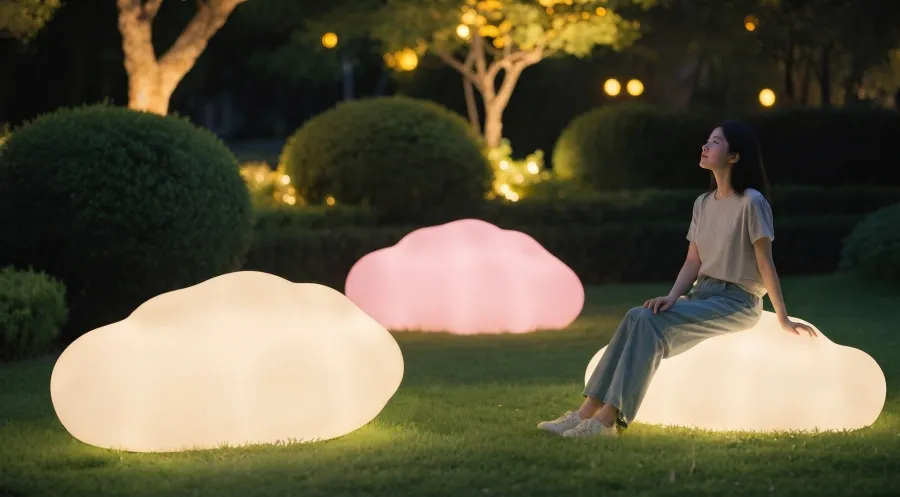
The cloud seat is the same process solving a different problem. A seat shaped like a cloud is all curves — no sharp corners, no straight edges, no place where a child can catch themselves. That shape is hard to make any other way at a sensible cost, and it is exactly what rotational molding is good at: a soft, hollow, one-piece shell that can take a person flopping down on it every day. The load is the thing to think about here. People do not sit on a cloud seat the way they sit on a dining chair. They drop onto it, lean on the arms, stand on it to reach a shelf. A seat that flexes a little and comes back is fine. A seat that flexes in the same thin spot every day will crack there eventually. So wall thickness is set for the part, not copied from a catalogue — a small seat and a large seat are not the same job, and the right thickness depends on the size of the piece and how it will be used. We keep it even across the whole piece, so there is no thin spot waiting to be found.
And then there is the glow. A cloud seat that lights up at night is not a lamp with a seat attached — it is a seat first, and the light has to work around that. The shell is shaped so the light inside shows evenly across the curves, with no bright patch in one place and a dull patch in another, and the surface stays smooth to sit on, with no sharp edge and no rough seam. That is a mold question as much as a light question: the shape of the shell decides how the glow looks, so it has to be planned into the mold from the start, not added afterwards.
Sun matters for both of them, and it is where a cheap part gives itself away. Colour mixed through the whole wall stays true far longer than a painted surface, which chips and peels where shoes, bags and plant pots scrape it. Ask your supplier what UV protection is in the material and how the colour is added. Then ask to see a piece that has actually lived outside. A photo of a new pot tells you nothing. A pot that has spent a year in a hotel garden tells you everything.
Material is the next decision, and we don't pick it from a catalog. We ask where the piece will live and who will use it. LLDPE is flexible and takes a knock well, which is why most of our outdoor parts use it — a planter that gets dragged across a terrace and a seat that gets dropped onto need to give a little instead of cracking. HDPE is stiffer and holds its shape under load, which suits a large planter full of wet soil or a long seat that must not sag. XLPE, cross-linked polyethylene, handles chemicals and hard use better. The table below is the simple version of how we think about it with buyers. The honest version always depends on your exact part, so send us the sample or the drawing and we will tell you which one we would actually use — and why.
| Piece and use | What usually matters most | Material we check first | Why |
|---|---|---|---|
| Flower pot outdoors | Sun, wet soil, knocks, easy cleaning | LLDPE | Takes daily use and knocks without cracking; wipes clean |
| Large planter, heavy soil | No bowing under load, even wall | HDPE or LLDPE | Stiffer material where the load is heavy; one-piece shell, no seam to split |
| Cloud seat, daily sitting | Toughness, lasting colour, soft shape | LLDPE | Gives a little instead of cracking; colour through the wall stays true |
| Harsh spot, chemicals | Chemicals, hard use, sun | XLPE | Handles hard use and chemicals better than the other two |
| Any piece, any site | UV resistance, colour through the wall | LLDPE first | Colour mixed through the wall stays true far longer than paint |
The mold is where I see buyers get burned, so let me be plain about how we work. You don't need a perfect drawing to start. Most customers come with either a physical sample or a 3D design file. Send us either one and we will make the mold. It usually takes 3 to 6 weeks, depending on size and complexity. You pay the mold fee, and the mold is yours — your design stays your design, and if you ever move production, that matters. If your orders build up to 10,000 pieces or more down the line, we refund the mold fee. We'll put that in writing before we start. No surprise later, for either of us.
A cheap mold that warps after a few hundred shots is not cheap, so ask any supplier — including us — how the mold is made, how many shots it is rated for, and what happens if you need a design change later. Ask to see a real piece, not just a render. Put soil in the pot. Sit on the seat. Leave them in the sun. A rotomolded piece that survives that week will probably survive your hotel, your park or your shop.
To quote you quickly, four things help: what the piece is for, how big it is, how many you need per order and per year, and whether you need drainage holes, inserts or assembly. With most outdoor furniture, volume per year matters as much as the drawing, because it decides whether rotomolding is the right process at all. We make custom rotomolded flower pots and cloud seats already, and we can mold them to your sample or file.
And so you can plan without guessing, here is how we normally work on a custom flower pot or cloud seat:
| Item | What we work to |
|---|---|
| MOQ | 50 pcs |
| Sample | Sent to you for confirmation within 3 days after the mold is confirmed |
| Bulk production | Generally 30 days |
| Mold lead time | Generally 3–6 weeks, depending on size and complexity |
| Mold fee | You pay it and own the mold; we refund it when cumulative orders reach 10,000 pieces or more |
| Warranty | 24 months |
So if your piece is large, hollow, and meant to live a hard life outside — a planter full of wet soil or a seat people drop onto every day — send us your sample or 3D file, your size, and your quantity. We will tell you honestly whether rotomolding fits, what the mold will cost, and how long it will take. If it doesn't fit, we will say so. I'd rather lose one order than make you a piece you'll regret.
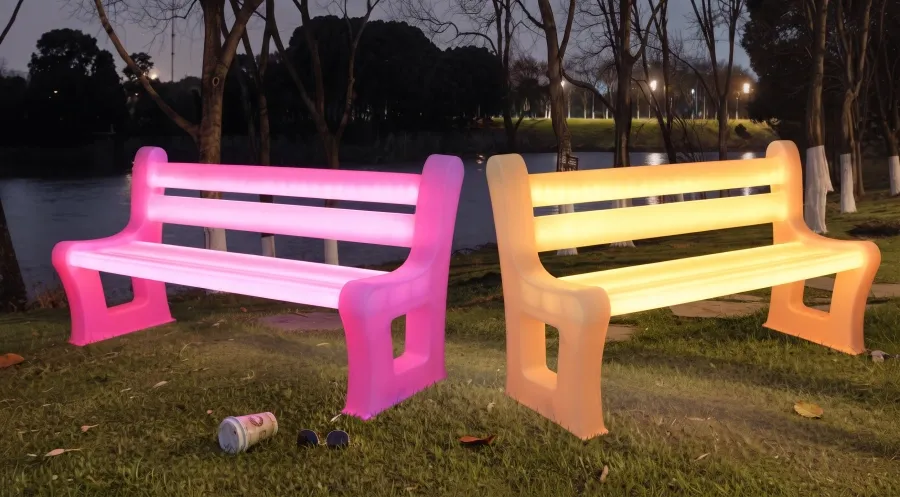
Superpower Lights is a manufacturer in China, making custom rotational molding products and LED furniture and lighting, with OEM/ODM service. See also our custom rotational molding molds, custom rotational molding, custom rotomolded outdoor furniture and rotomolded park bench pages.