Custom Rotomolded Outdoor Seat
Custom rotomolded outdoor seats made in one seamless piece in China — curved, comfortable, UV-resistant, made to your sample or 3D file. MOQ 50 pcs, quote in 24 hours.
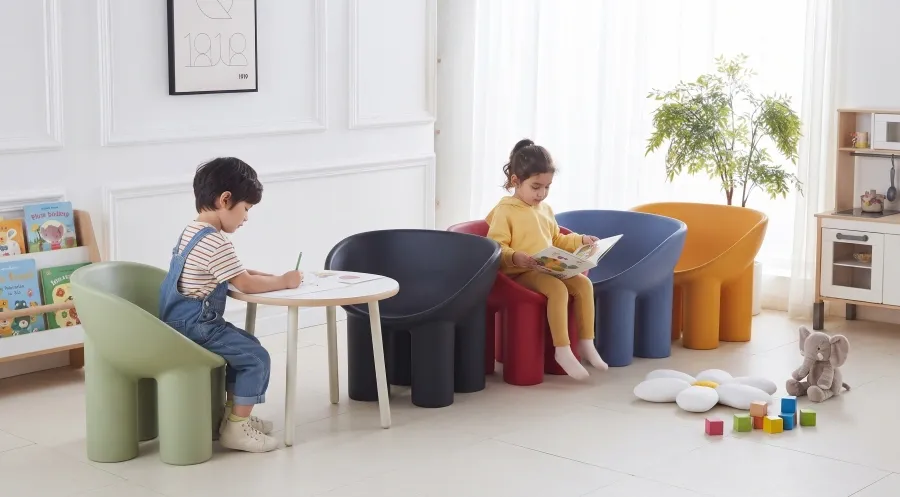
A bench seats three people. A seat seats one — and that one person notices everything about it. A bench can be a little too hard, a little too flat, and nobody complains, because nobody stays on it for long. A seat is different. Someone sits in it with a drink, or waits in it outside a hotel entrance, or eats lunch in it in a park, and if the curve is wrong, if the back pushes in the wrong place, if the seat holds rainwater, they feel it in a minute and they do not sit there again. That is why a rotomolded outdoor seat is a design job before it is a manufacturing job, and why the mold matters so much: once the mold is made, every seat that comes out of it has the same curve, the same back, the same edge. Get the curve right once, and a thousand seats are right. Get it wrong, and a thousand seats are wrong in exactly the same way.
We make custom rotomolded outdoor seats in our 4 factories in China — 20,000+ m2 in total, 350 employees, 25 rotomolding machines, able to make parts up to 4 m — and we make them to order, from your sample or your 3D design file. A seat is the kind of part rotational molding was made for: large, hollow, curved in every direction, and expected to live outside with no maintenance. The process suits it the same way it suits a bench, a planter or a cloud seat, and the reasons are the same ones we covered in the earlier pieces of this outdoor-furniture cluster.
Why one piece matters for a rotomolded outdoor seat
Rotational molding makes a seat in one piece. We weigh plastic powder, close it inside a hollow metal mold, and let the mold turn slowly on two axes in an oven. The powder melts and coats the inside evenly, then the mold keeps turning while it cools so the part doesn't slump. No seam under the seat where water can sit. No joint where the backrest meets the base for rain to get into. For a seat that lives outside all year, that single detail is often the whole decision. Water finds a joint. Sun finds a weak spot. A one-piece shell gives them nowhere to start.
Before we talk about materials, it is worth saying what a rotomolded seat is not. It is not a precision part. If your seat needs fine threads, snap fits to a fraction of a millimeter, or thousands of tiny identical connectors, another process will serve you better, and we will tell you that. A seat is a big, curved, load-bearing shape, and that is where rotomolding earns its keep: the mold costs far less than an injection mold, the wall comes out even, and there are no thin corners waiting to fail first.
Comfort: the curve decides whether anyone sits twice
Comfort is the first thing to ask about, because it is where a cheap seat gives itself away. A seat is not a flat box with a back stuck on it. The curve of the seat, the angle of the back, the height of the front edge — all of these decide whether someone sits in it for five minutes or five seconds. A front edge that is too sharp cuts into the back of the legs. A back that is too upright feels like a waiting-room chair. A seat that is too deep leaves a short person with their feet dangling. None of this shows up in a drawing. It shows up when a real person sits in a real sample. So ask your supplier for a sample seat you can actually sit in, before the mold is finished, and sit in it yourself — and then ask someone shorter and someone taller than you to sit in it too. That one afternoon of sitting is worth more than a week of drawings.
Drainage and sun: the two tests a seat must pass outside
Drainage is the second thing, and buyers forget it until the first rain. A seat that holds water is a seat nobody uses. The curve of the seat should let rain run off, not pool in the middle, and if the seat has a hollow base, it needs a way for water to get out. Tell us at the start how the seat will be used — on a hotel terrace, in a park, beside a pool — and we will plan the drainage and the fixing points into the mold, while it is still cheap to do. Adding a drain hole or a fixing boss after the mold is made costs far more than planning for it at the beginning, and it is the difference between a seat that dries in an hour and one that stays wet all day.
Sun is the third thing to ask about, because it is what kills outdoor plastic. A seat that looks bright in the catalogue and fades to chalky white in one summer has not failed because the design was wrong — the material was. Ask your supplier what UV protection is in the material, and how the colour is added: colour mixed through the whole wall stays true far longer than a painted surface, which chips and peels where shoes and bags scrape it. Then ask to see a seat that has actually lived outside. A photo of a new seat tells you nothing. A seat that has spent a year in a park tells you everything.
Wall thickness and material: LLDPE, HDPE or XLPE for a seat
Wall thickness is the next decision, and it is where a cheap seat gives itself away. A seat is loaded unevenly — people sit in the middle, push off the arms, stand on the seat to reach something they shouldn't, drag it across paving. If the wall is thin in the curve where the seat meets the back, it flexes, and flexing is what starts cracks. We don't write one fixed wall thickness for every seat, because the right thickness depends on the size of the piece and how it will be used — a small garden seat and a wide lounge seat are not the same job. What we do is set the thickness for your part, and keep it even across the whole piece, so there is no thin spot waiting to be found.
Material is the next decision, and we don't pick it from a catalog. We ask where the seat will live and who will use it. LLDPE is flexible and takes a knock well, which is why most of our outdoor parts use it — a seat that gives a little instead of cracking is what you want in a public park or a hotel garden. HDPE is stiffer and holds its shape under load, which suits a wide seat that must not sag in the middle over years of use. XLPE, cross-linked polyethylene, handles chemicals and hard use better. The table below is the simple version of how we think about it with buyers. The honest version always depends on your exact part, so send us the sample or the drawing and we will tell you which one we would actually use — and why.
| Seat question | What usually matters most | Material we check first | Why |
|---|---|---|---|
| Single garden or hotel seat | Toughness, lasting colour, easy cleaning | LLDPE | Takes daily use and knocks without cracking; wipes clean |
| Wide lounge seat | No sag, even wall, comfortable curve | HDPE or LLDPE | Stiffer material where the span is wide; one-piece shell, no seam to split |
| Seat in a harsh spot | Chemicals, hard use, sun | XLPE | Handles hard use and chemicals better than the other two |
| Curved or cloud-shaped seat | Even wall in deep curves, no thin spots | LLDPE first | Flows evenly into curves; colour mixed through the wall stays true |
| Any seat, any site | UV resistance, colour through the wall | LLDPE first | Colour mixed through the wall stays true far longer than paint |
Ordering a set: colour matching, fixing and spares
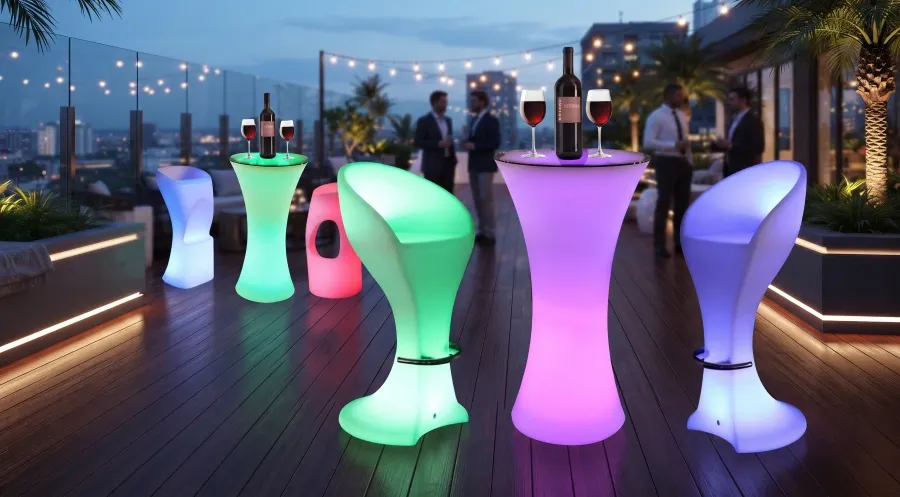
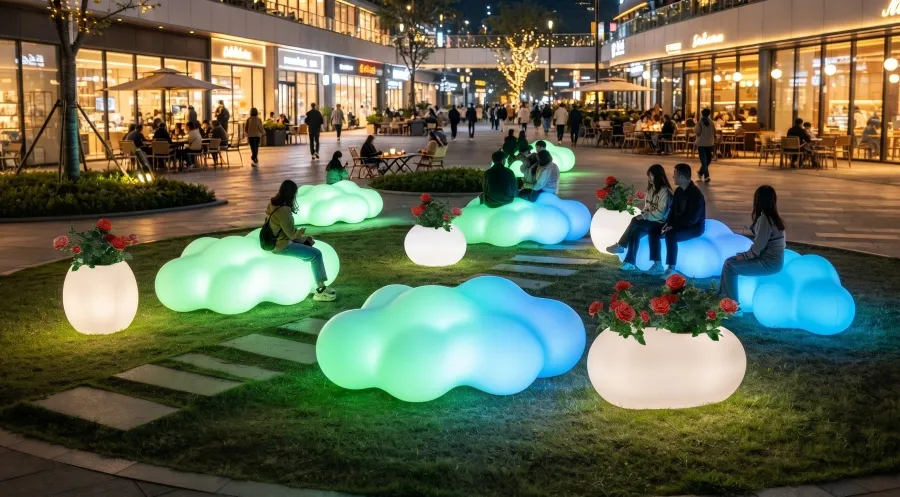
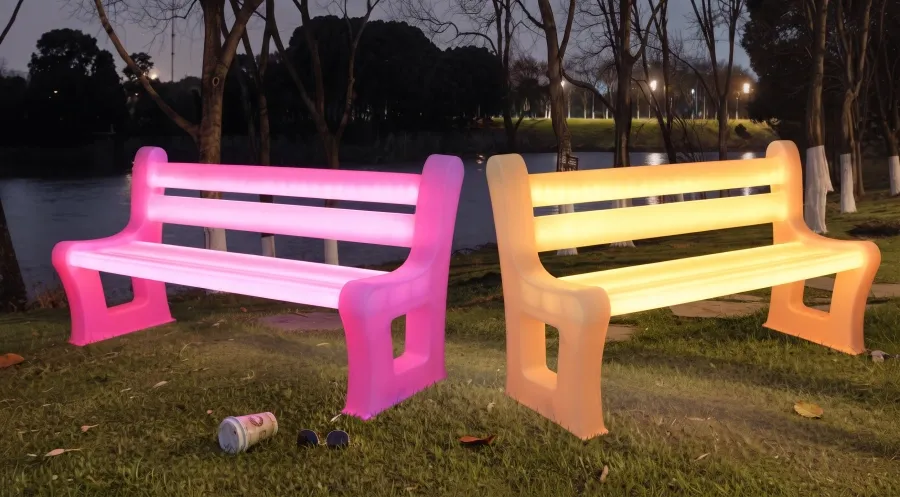
A seat rarely lives alone. It usually arrives as part of a set — a LED Park bench, Rechargeable LED Planters, an Outdoor Illuminated Chair with LED, a Glowing LED Cloud seat — and the set has to look like it belongs together. Colour is the part buyers underestimate: two seats from two different factories, ordered six months apart, will not match, even if both were ordered as the same colour. Order the set from one factory, from one material batch, and the colour stays consistent across every piece. That is also why we ask about spares at the start: if one seat breaks in three years, can you buy that one piece, or do you have to replace the whole set? Tell us at the start and we will keep the mold and the colour record, so a single replacement matches the rest.
Fixing is the part buyers forget until the first seat walks away or rocks on uneven paving. A seat is only as good as its mounting points and the way it sits on the ground, so ask how it is fixed, and what happens if one part needs replacing in three years — can you buy that one piece, or do you have to replace the whole seat? If your part needs metal inserts, bosses, or a particular fixing position, tell us at the start, while the mold is still being planned. It costs little to plan for and a lot to retrofit, and it is the difference between a seat that stays put and one that ends up in the wrong corner of the park.
The mold: where buyers get burned
The mold is where I see buyers get burned, so let me be plain about how we work. You don't need a perfect drawing to start. Most customers come with either a physical sample or a 3D design file. Send us either one and we will make the mold. It usually takes 3 to 6 weeks, depending on size and complexity. You pay the mold fee, and the mold is yours — your design stays your design, and if you ever move production, that matters. If your orders build up to 10,000 pieces or more down the line, we refund the mold fee. We'll put that in writing before we start. No surprise later, for either of us.
A cheap mold that warps after a few hundred shots is not cheap, so ask any supplier — including us — how the mold is made, how many shots it is rated for, and what happens if you need a design change later. Ask to see a real seat, not just a render. Sit in it, push it, leave it in the sun. A rotomolded seat that survives that week will probably survive your park.
From drawing to delivery: the order in five steps
Before the mold is made, it helps to see the whole journey, so here is how an order usually runs from your drawing to a finished seat:
| Step | What happens | What to check |
|---|---|---|
| 1. Send your sample or 3D file | We review the shape and tell you honestly whether rotomolding fits | Size, use, and whether the shape needs inserts or drainage |
| 2. Mold is made | Usually 3–6 weeks, depending on size and complexity; you pay the mold fee and own the mold | How the mold is made, and what happens if the design changes later |
| 3. Sample for confirmation | Sent to you within 3 days after the mold is confirmed | Sit in it — check the curve, the back, the front edge — and check the colour against your sample |
| 4. Colour, fixing and spares | Colour matched to your sample; fixing points and spares planned before bulk | Is the colour through the wall? Are the fixing points right? How many spares? |
| 5. Bulk production | Generally 30 days; warranty 24 months; mold fee refunded when cumulative orders reach 10,000 pieces or more | One factory, one material batch, so the whole set matches |
To quote you quickly, four things help: what the seat is for, how big it is, how many you need per order and per year, and whether you need inserts or assembly. With most outdoor furniture, volume per year matters as much as the drawing, because it decides whether rotomolding is the right process at all. We make custom rotomolded outdoor seats already, and we can mold them to your sample or file.
And so you can plan without guessing, here is how we normally work on a custom outdoor seat:
| Item | What we work to |
|---|---|
| MOQ | 50 pcs |
| Sample | Sent to you for confirmation within 3 days after the mold is confirmed |
| Bulk production | Generally 30 days |
| Mold lead time | Generally 3–6 weeks, depending on size and complexity |
| Mold fee | You pay it and own the mold; we refund it when cumulative orders reach 10,000 pieces or more |
| Warranty | 24 months |
So if your seat is large, curved, and meant to live a hard life outside with people sitting in it every day, send us your sample or 3D file, your size, and your quantity. We will tell you honestly whether rotomolding fits, what the mold will cost, and how long it will take. If it doesn't fit, we will say so. I'd rather lose one order than make you a seat you'll regret.
This piece closes our outdoor-furniture cluster. If you are still deciding between pieces, start with the overview — custom rotomolded outdoor furniture — then the rotomolded park bench, the rotomolded flower pot and cloud seat, and our guide to how to choose rotomolded outdoor furniture. Together they cover the four pieces most parks, hotels and gardens order first — and if your order also includes a lit piece, our Outdoor Illuminated Chair with LED and Glowing LED Cloud seat are made in the same factories, to the same order terms.
Quick questions buyers ask us
Can I order the seat on its own, without the rest of a furniture set?
Yes. The minimum order is 50 pcs, whether the seat is a standalone order or part of a larger set. If you do plan to add benches or planters later, tell us at the start — ordering from one factory and one material batch is what keeps the colours matching across the set.
How long until I can actually sit in a sample seat?
The mold generally takes 3–6 weeks, depending on size and complexity. Once the mold is confirmed, we send a sample to you for confirmation within 3 days, so you can sit in the real seat — and have people taller and shorter than you sit in it too — before bulk production, which generally takes about 30 days.
Who owns the mold, and is the fee ever refunded?
You pay the mold fee and the mold is yours — your design stays your design. When your cumulative orders reach 10,000 pieces or more, we refund the mold fee, and we put that in writing before we start.
Superpower Lights is a manufacturer in China, making custom rotational molding products and LED furniture and lighting, with OEM/ODM service. See also our custom rotational molding molds, custom rotational molding and custom rotomolded outdoor furniture pages.